|
5. Confidential and No sharing.
Under federal law, Title 13 U.S.C. §§ 8, 9, 221, personal information given to the Census is private and may not be shared with the immigration service, IRS, or law enforcement. The protections have been upheld and strengthened by courts of law.
6. Only 9 questions
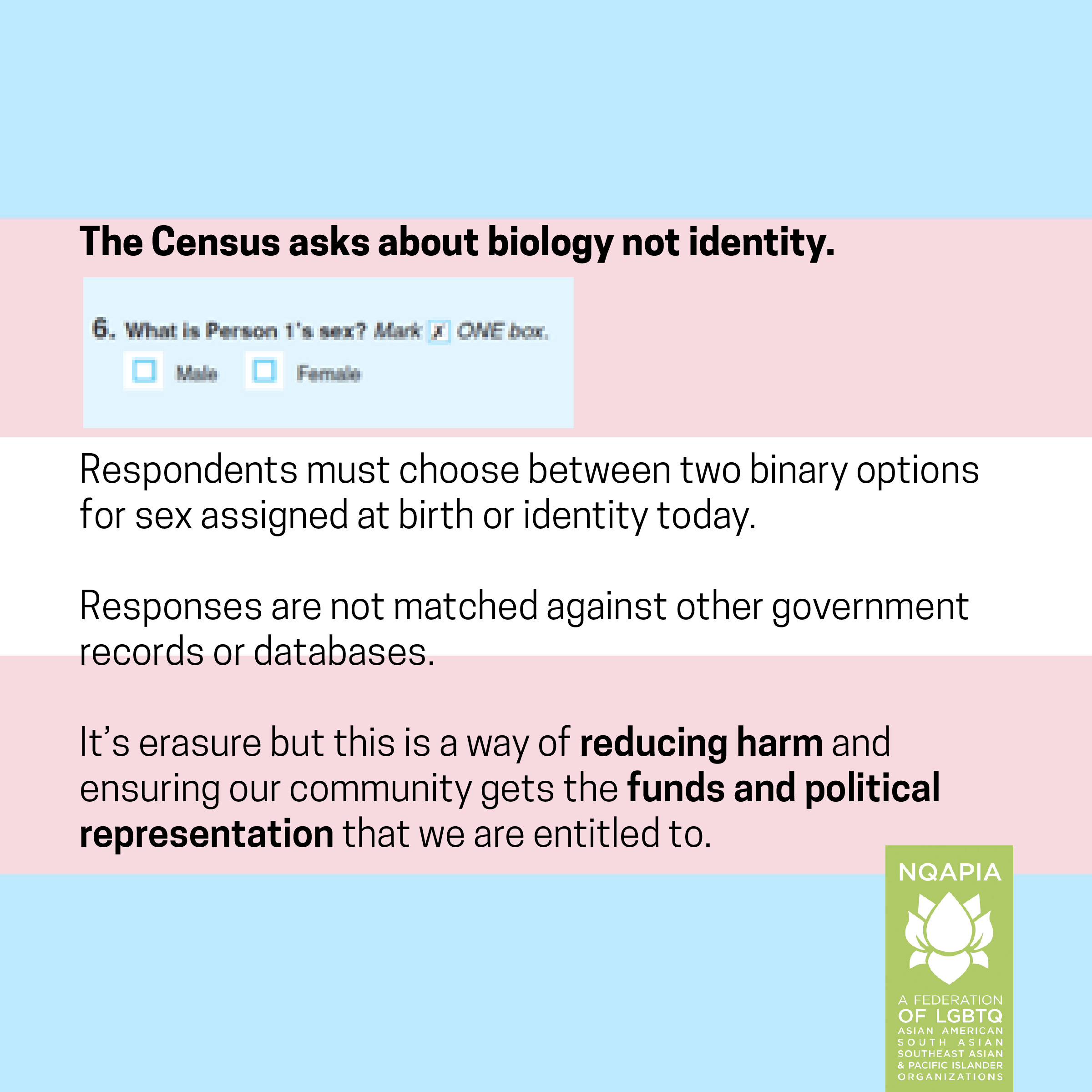
Name, age, date of birth, race/ ethnicity, relationship (spouses, roommates, children), sex (not gender), rent or own home, number of people in household, and phone number. The census does not ask about citizenship, employment, income, or immigration status.
7. How, When, Translations
Responses are due online, by phone, or by mail. In mid-April, non-responding households will receive a paper questionnaire in the mail. From May to August, census takers will visit homes that haven't responded. The online form is also available in Simplified Chinese, Vietnamese, Korean, Arabic, Tagalog, and Japanese.
|
|
|
8. Fines up to $5,000 for not responding
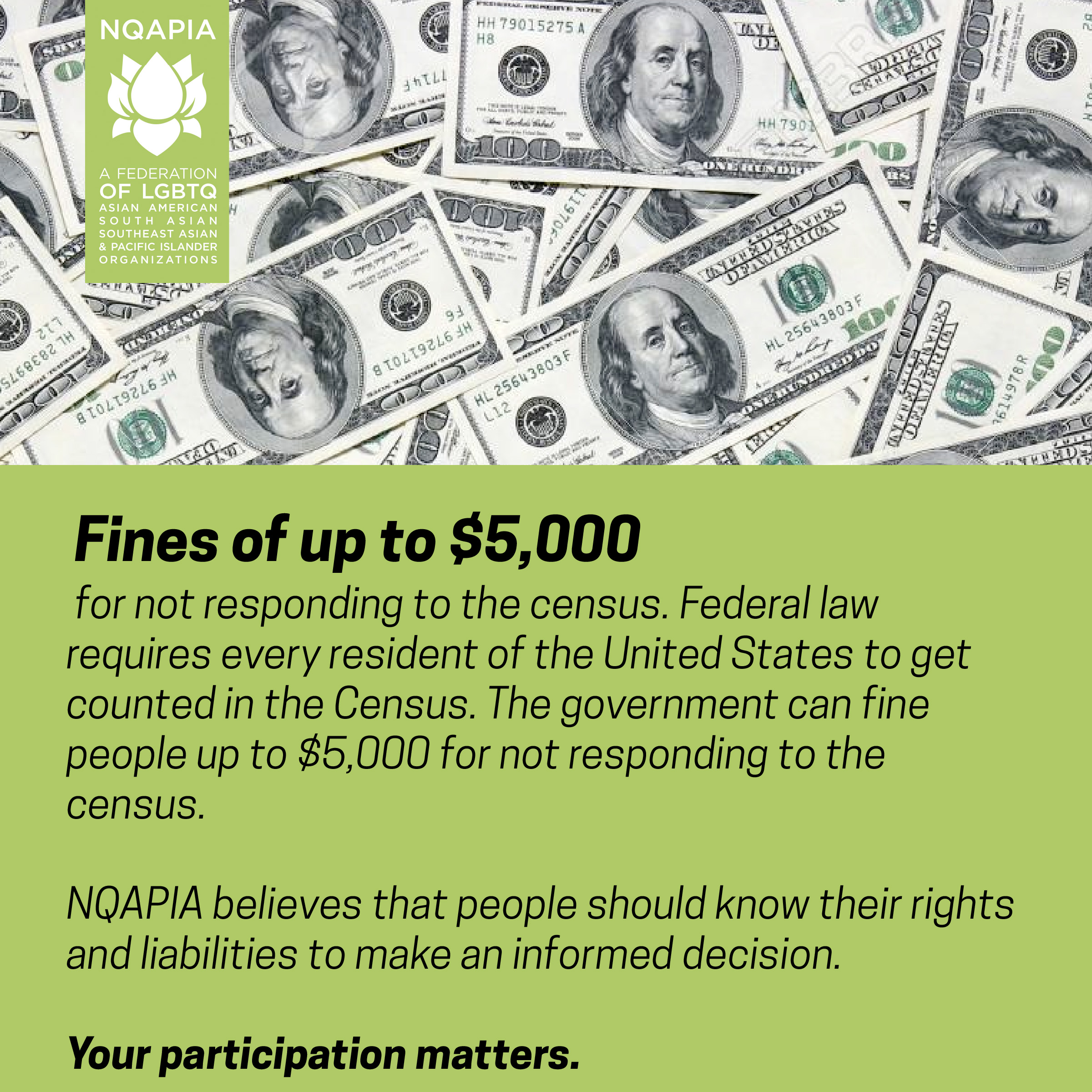
Federal law also requires all residents to completely and truthfully answer all questions. People can be fined up to $5,000 for not responding to the census. 13 U.S.C. § 221; 18 U.S.C. §§ 3571, 3559. It is illegal to discourage others from participating and punishable by fine, imprisonment, or both.
|
|
|
 |
|
[Image Description: Photos of $100 bills with text along the bottom "Fines of up to $5,000 for not responding to the Census. Federal law requires every resident of the United States to get counted in the Census. The government can fine people up to $5,000 for not responding to the Census. NQAPIA believes that people should know their rights and liabilities to make an informed decision. Your participation matters."]
|
|
|
|